
I jump to the diagnosis too quickly
You may recognise the likely answer but not show enough of the reasoning pathway.
Likely problem: conclusion before reasoning. Useful repair: practise feature-to-hypothesis explanations.
Common exam preparation problem
Some candidates can reason clinically during study or discussion, but their reasoning becomes less organised, less complete, or less visible when the exam becomes timed, observed, or high stakes.
This can be frustrating because the problem may not be lack of knowledge. You may understand the case, recognise the likely diagnosis, or know the management, but struggle to show the reasoning pathway clearly under pressure.
This page helps you identify whether the issue is differential generation, prioritisation, reasoning structure, decision-making, communication, or recovery after uncertainty.
Quick diagnosis
If your reasoning becomes less organised under exam pressure, the problem may occur at different points in the reasoning pathway.
You may recognise the likely answer but not show enough of the reasoning pathway.
Likely problem: conclusion before reasoning. Useful repair: practise feature-to-hypothesis explanations.
You may know possible diagnoses but struggle to generate or rank them under pressure.
Likely problem: weak differential structure. Useful repair: practise structured differential generation.
You may focus on the likely diagnosis but miss urgency, risk, safety or what matters most.
Likely problem: weak prioritisation. Useful repair: practise ranking likelihood, severity and urgency.
You may think through the reasoning internally but not make it visible to the examiner.
Likely problem: hidden reasoning. Useful repair: practise reasoning aloud or written justification.
Prompts, follow-up questions or examiner pressure may disrupt your structure.
Likely problem: reasoning not robust under prompts. Useful repair: practise restart phrases and structured responses.
You may identify the problem but struggle to sequence investigation, treatment, escalation, communication or follow-up.
Likely problem: incomplete clinical reasoning sequence. Useful repair: practise diagnosis → priority → action sequences.
Start here
Choose the statement that best matches what happens when you try to reason clinically under exam conditions.
The reasoning may be present internally but not visible enough.
Likely problem: hidden reasoning. Better next action: practise linking cues to hypotheses.
Start with the reasoning gapThe problem may be less about knowledge and more about structure.
Likely problem: weak differential framework. Better next action: practise a repeatable differential structure.
Use the practice ladderThe reasoning may become too narrow under pressure.
Likely problem: premature closure. Better next action: practise contrast reasoning and red-flag review.
Choose practice targetsThe answer may include correct information but not the most important risk, action or sequence.
Likely problem: weak prioritisation. Better next action: practise ranking likelihood, severity and urgency.
Review breakdown mapThe exam conditions may be disrupting reasoning structure and communication.
Likely problem: exam-condition reasoning gap. Better next action: practise clinical reasoning under timed or observed conditions.
Try the repair drillThe mark-loss pattern may not be clear from the score alone.
Likely problem: unclear bottleneck. Better next action: map where reasoning becomes less visible or less organised.
How a session helpsCandidates often describe this problem as being able to reason clinically in one setting but not being able to show that reasoning clearly in the exam.
You may reach a reasonable conclusion, but the reasoning behind it is not clear enough for marks.
You may know several possibilities but struggle to rank, compare or explain them under pressure.
The response may include clinical detail but miss urgency, risk, safety or the next action.
Being questioned, timed or watched may make your reasoning less structured, less concise or less visible.
Clinical reasoning in medical exams usually requires more than reaching the correct answer. It requires the candidate to show how clinical cues, differential diagnoses, risks, priorities and next steps fit together.
A candidate may reason well in calm settings but lose structure when the exam adds time limits, observation, uncertainty, prompts or perceived consequences.
That means preparation needs to train not only clinical knowledge, but how to organise and communicate reasoning under exam-like conditions.
Reasoning-under-pressure gap
If preparation mostly trains diagnosis recognition or content recall, there can be a gap between knowing what is going on clinically and producing a clear reasoning pathway under exam conditions.
You may understand the diagnosis, presentation, investigation or management when studying calmly.
The exam requires cue recognition, differential reasoning, prioritisation, decision-making, communication and structure.
The examiner can only mark the reasoning that is shown clearly in the written, spoken or clinical performance.
Clinical reasoning depends on both knowledge and process. Under pressure, the process can become less reliable.
You may lock onto one diagnosis and stop considering alternatives or red flags.
You may know the clinical content but lose the sequence needed to explain it clearly.
You may include details but fail to identify what is urgent, risky or most important.
Follow-up questions may interrupt your reasoning and make it harder to restart clearly.
You may use vague or general language even when the reasoning is partly present.
Untimed or private study may not train reasoning under observation, time pressure or uncertainty.
Reasoning diagnosis
A useful repair depends on which part of the clinical reasoning pathway becomes weak under exam pressure.
You miss or underuse important details in the stem, case, chart, station or prompt.
Repair: Practise identifying cues before naming the diagnosis.
You struggle to generate plausible diagnoses or options.
Repair: Practise category-based differential generation.
You list options but do not rank likelihood, risk or urgency.
Repair: Practise ranking by likely, dangerous and actionable.
You know the answer but do not explain how you got there.
Repair: Practise “because” statements linking evidence to conclusion.
You identify the problem but lose the investigation, treatment or escalation sequence.
Repair: Practise priority → investigation → action → safety sequences.
A follow-up question disrupts your answer and reasoning becomes scattered.
Repair: Practise restart phrases and compact reasoning frameworks.
When reasoning breaks down under pressure, the natural response is often to study more clinical content. Sometimes content review helps, but it may not fix the reasoning process that is breaking down.
This may improve familiarity but not the ability to organise reasoning under pressure.
Lists can help, but they may not train ranking, prioritisation or explanation.
Case volume helps less if you do not review how the reasoning unfolded.
Right or wrong review can miss cue recognition, prioritisation, differential reasoning and communication problems.
Better practice target
The repair should train the part of clinical reasoning that becomes less reliable under exam conditions.
Practise linking key clinical features to likely diagnoses or explanations.
Practise building differentials by category rather than relying only on memory.
Practise identifying what is likely, dangerous, urgent, or must-not-miss.
Practise explaining your pathway clearly and concisely under time pressure.
Practise moving from assessment to investigation, action, communication, escalation and safety.
Practise restarting reasoning after examiner prompts, uncertainty or correction.
Practice ladder
Try this this week
Use this after one question, case, viva answer or station where your reasoning felt scattered, incomplete or less convincing than it should have been.
Was the problem cues, differential, priority, explanation, management sequence or recovery after prompts?
What reasoning step should have connected the clinical features to the conclusion or next action?
Rehearse the answer again with one clearer reasoning pathway, priority or sequence.
“Do I know the clinical content?” This can keep review focused only on private knowledge.
“Can I show a clear, prioritised reasoning pathway under exam conditions?” This shifts practice toward exam-visible clinical reasoning.
Worked examples
Situation: you know the likely diagnosis, but the examiner asks a follow-up question and your answer loses structure. Less useful: reread the entire topic again. Better: practise a restart phrase and a three-part reasoning frame: key cues, likely diagnosis, next priority.
Situation: you understand the clinical issue but miss closure, escalation, safety-netting or communication because the station feels pressured. Less useful: focus only on diagnostic accuracy. Better: practise station sequence: recognise the issue, explain reasoning, prioritise action, communicate clearly, close safely.
Situation: you include correct content but do not show how the facts support the answer. Less useful: write more content. Better: practise adding concise “because” statements linking key features to the conclusion.
Exam-format guidance
Personalised planning support
The 1:1 Exam Performance Planning Session can help identify where clinical reasoning becomes less organised or less visible under exam pressure.
The aim is not simply to add more content. The aim is to clarify whether the issue is cue recognition, differential reasoning, prioritisation, reasoning explanation, management sequence, prompt recovery, or exam-format output.
We identify whether the issue is cues, differential generation, prioritisation, explanation, sequencing or recovery.
We examine whether preparation is training knowledge recognition only, or also reasoning under exam conditions.
We identify whether to focus on reasoning structure, differential ranking, management sequencing, or prompt recovery.
You leave with a clearer practice plan for making clinical reasoning visible under pressure.
Scope
The work is performance-focused: identifying why clinical reasoning becomes less organised under exam conditions, then designing practice that makes reasoning more visible, structured and prioritised.
Common questions
Clinical reasoning may become less organised when the exam adds time pressure, observation, uncertainty, prompts, or perceived consequences. The issue may be reasoning structure under conditions, not knowledge alone.
Not necessarily. Some candidates reason well in calm settings but need more practice showing a clear reasoning pathway under exam conditions.
Practise reasoning aloud using a compact structure: key cues, likely diagnosis, important alternatives, priority action, and safety considerations.
Practise identifying key cues before naming the diagnosis, and include a brief differential or “why not” comparison.
Use explicit linking language such as “because”, “this matters because”, “the priority is”, and “this makes X more likely than Y”.
Yes. Candidates can often improve by practising the specific reasoning step that breaks down under pressure: cue recognition, differential ranking, prioritisation, explanation, sequencing or recovery.
Resource note
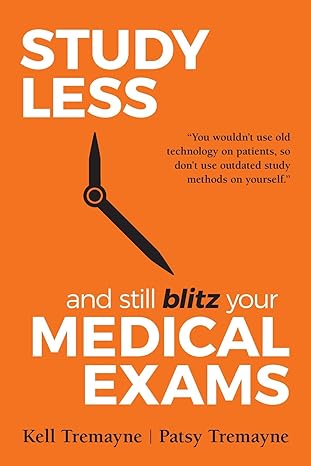
This approach builds on the practical exam preparation principles in Study Less and Still Blitz Your Medical Exams, co-authored by Dr Kell Tremayne and Dr Patsy Tremayne, and adapts them to individual exam performance planning.
A 1:1 Exam Performance Planning Session can help identify where clinical reasoning breaks down under exam conditions, and build a more targeted practice plan.


Jul 11, 26 10:42 PM
Jul 11, 26 10:11 PM
Jul 11, 26 09:51 PM