Common exam preparation problem

Losing Marks Despite Knowing the Diagnosis

Some candidates can recognise the diagnosis, condition, or likely answer, but still lose marks because the exam requires more than naming the correct endpoint.

Medical exams often reward the reasoning, prioritisation, structure, safety thinking, and next steps that sit around the diagnosis. If those parts are missing or unclear, the examiner may not be able to award the marks you expected.

This page helps you identify whether marks are being lost because of hidden reasoning, weak structure, poor prioritisation, incomplete management, or insufficient exam-format output.

Quick diagnosis

Where are the marks being lost?

If you know the diagnosis but still lose marks, the problem may be occurring after diagnostic recognition.

I name the diagnosis but do not explain why

You may recognise the condition but not show the clinical reasoning that links the case features to the diagnosis.

Likely problem: hidden reasoning. Useful repair: practise explaining why the diagnosis fits.

I miss marks for differentials

You may identify the main diagnosis but not show enough consideration of alternatives or red flags.

Likely problem: incomplete differential reasoning. Useful repair: practise “why this, why not that” explanations.

I know the answer but write too generally

You may give a broad answer rather than the specific features, risks, or actions the question is asking for.

Likely problem: poor task targeting. Useful repair: practise command words, cues and mark focus.

I miss management or next-step marks

You may stop at the diagnosis instead of showing appropriate investigations, management, escalation, or follow-up.

Likely problem: incomplete clinical sequence. Useful repair: practise diagnosis plus next steps.

My answer is correct but disorganised

The main idea may be right, but the response may be hard to follow or mark.

Likely problem: weak answer structure. Useful repair: practise repeatable frameworks.

I do not show safety or prioritisation

You may miss marks for urgency, risk, red flags, escalation, or what must happen first.

Likely problem: weak prioritisation. Useful repair: practise ranking what matters most.

Start here

Start here if…

Choose the statement that best matches what happens when you know the diagnosis but the mark does not reflect it.

“I got the diagnosis right but still lost marks.”

The diagnosis may not have been enough for the marking frame.

Likely problem: diagnosis treated as the whole answer. Better next action: identify what else the examiner needed to see.

Review mark-loss map

“I know what it is, but I do not explain it well.”

The answer may not show the reasoning pathway clearly enough.

Likely problem: hidden reasoning. Better next action: practise explaining the link between case features and diagnosis.

Use the practice ladder

“I forget to mention differentials.”

The answer may not show enough contrast with alternatives.

Likely problem: incomplete comparative reasoning. Better next action: practise why this diagnosis is more likely than others.

Choose practice targets

“I lose marks on management even when the diagnosis is right.”

The exam may be marking the clinical sequence after diagnosis.

Likely problem: incomplete next steps. Better next action: practise diagnosis → investigation → management → safety.

Choose practice targets

“My answers are correct but scattered.”

The examiner may not be able to see the markable parts clearly.

Likely problem: weak structure. Better next action: use a consistent answer framework.

Review mark-loss map

“I need help working out why the mark is low.”

The issue may be difficult to diagnose from the score alone.

Likely problem: unclear mark-loss pattern. Better next action: review where the answer fails to show reasoning, priority or next steps.

How a session helps

Does this sound familiar?

Candidates often describe this problem as knowing what is going on clinically, but not receiving the marks expected.

The diagnosis is right but the mark is low

You may have reached the correct endpoint, but the response may not have shown enough reasoning, evidence, or action.

The answer sounds clinically sensible but not exam-ready

You may be thinking like a clinician but not organising the response around the marking frame.

You miss marks for omissions

The diagnosis may be correct, but key investigations, management priorities, communication steps, or safety points may be missing.

Feedback says “needs more structure” or “justify your answer”

This often means the examiner wants more visible reasoning, not simply more content.

The examiner can only mark what is shown. If the reasoning, prioritisation or next steps are hidden, the diagnosis alone may not carry the answer.

This is often a diagnosis-to-marks problem.

Medical exams often ask candidates to do more than name the correct diagnosis. They may require evidence, reasoning, prioritisation, management, communication, safety thinking, and structure.

A candidate may know the diagnosis but still lose marks if the answer does not make the reasoning visible or does not complete the task the question is asking for.

That means preparation needs to practise the conversion from diagnosis recognition into mark-visible reasoning and action.

The useful question is not only, “Did I know the diagnosis?” It is also, “Did I show the answer the examiner was marking?”

Diagnosis-to-marks gap

Knowing the diagnosis is not always the same as earning the marks.

If preparation mostly trains diagnosis recognition, there can be a gap between identifying the answer and showing enough of the reasoning, priorities and next steps to earn marks.

Starting point

Diagnosis recognition

You can identify the likely condition, answer, or clinical direction.

Exam demands

The markable layer

The exam may require reasoning, differentials, priorities, investigations, management, safety, communication and structure.

Exam output

Exam marks

The examiner awards marks for what is shown clearly in the response, not only for what you understood privately.

The aim is not simply to know the diagnosis. The aim is to make the diagnosis, reasoning and next steps visible in the form the exam rewards.

Why this can happen even when the diagnosis is right.

Recognising the diagnosis and producing a mark-scoring answer are related, but they are not identical skills.

The endpoint is visible but not the pathway

You may name the diagnosis without showing the features that support it.

Differentials are not considered

You may miss marks for not explaining what else was possible and why it is less likely.

The answer is not prioritised

You may include correct information but not identify the most important risks, actions, or next steps.

Management is incomplete

You may stop at diagnosis instead of showing investigation, treatment, escalation, follow-up, or safety.

Structure is weak

The answer may contain relevant ideas but not in a sequence that is easy to mark.

The response does not match the exam format

MCQ, SAQ, viva and OSCE formats require different ways of showing diagnostic reasoning.

Mark-loss diagnosis

Where are the marks being lost?

A useful repair depends on which part of the diagnosis-to-marks pathway is missing.

Diagnosis only

You name the condition but do not explain why.

Repair: Practise linking key case features to the diagnosis.

Missing differential reasoning

You do not explain why alternatives are less likely.

Repair: Practise “why this, why not that” reasoning.

Weak prioritisation

You include true information but not the most important risks or next actions.

Repair: Practise ranking urgency, safety, likelihood and impact.

Incomplete next steps

Diagnosis is correct but investigations, management, escalation or follow-up are missing.

Repair: Practise diagnosis → next step sequences.

Poor structure

Relevant points are present but hard to follow.

Repair: Practise repeatable answer frameworks.

Unclear exam task

The answer is clinically sensible but not matched to the command word or marking focus.

Repair: Practise command-word and mark-allocation review.

What often does not fix this problem.

When candidates know the diagnosis but lose marks, the instinct is often to review more diagnostic content. Sometimes that helps, but it may not fix the part of the answer that is actually losing marks.

Only memorising more diagnoses

This may improve recognition but not necessarily reasoning, prioritisation or next-step marks.

Only doing more cases

Case volume helps less if the review does not identify where the answer failed to show marks.

Only checking whether the diagnosis was right

Right or wrong review can miss structure, reasoning, differential, safety and management errors.

Only reading model answers

Model answers help more when you actively compare what you showed against what the examiner needed.

Better practice target

What to practise instead.

The repair should train the part of the answer that turns diagnosis recognition into marks.

Feature-to-diagnosis reasoning

Practise explaining which case features support the diagnosis.

Differential contrast

Practise why the likely diagnosis is more plausible than alternatives.

Priority ordering

Practise identifying what is urgent, high-risk, common, likely, or mark-relevant.

Next-step sequencing

Practise investigation, management, escalation, communication and safety sequences.

Command-word targeting

Practise answering exactly what the question is asking for.

Mark-focused review

Review whether the answer showed enough reasoning, structure and action to earn marks.

The goal is not simply to name the diagnosis faster. The goal is to show the reasoning and actions the exam rewards.

Practice ladder

Build from diagnosis to markable answer.

  1. Name the diagnosis: Identify the likely condition, answer, or clinical direction.
  2. Link the evidence: State the key features that support the diagnosis.
  3. Contrast alternatives: Briefly explain important differentials or red flags.
  4. Prioritise next steps: Identify investigations, management, safety, escalation or communication priorities.
  5. Review against marks: Check whether the answer showed what the examiner could actually award.
The aim is to move from diagnostic recognition to mark-visible reasoning, then to exam-format output.

Try this this week

A three-minute mark repair drill.

Use this after one case, question, SAQ, viva answer, or station where you knew the diagnosis but the mark was lower than expected.

Minute 1

Name what was missing

Was the missing part reasoning, differential, priority, management, structure, safety, or command-word focus?

Minute 2

Add the mark-visible evidence

What should the examiner have been able to see in the answer?

Minute 3

Repeat one repair

Rewrite or rehearse the answer with one improvement: clearer reasoning, better structure, stronger priority, or complete next steps.

The repair should be small enough to repeat. Marks improve when candidates practise showing the missing reasoning or action.

The more useful question.

Less useful question

“Did I know the diagnosis?” This can keep review focused only on the endpoint.

More useful question

“Did I show the reasoning, priorities and next steps the examiner could mark?” This shifts review toward mark-visible clinical reasoning.

Shift from diagnosis recognition toward mark-visible clinical reasoning.

Worked examples

What this looks like in practice.

Example 1

SAQ diagnosis correct but reasoning thin

Situation: you identify pulmonary embolism but do not explain why the symptoms, risk factors and observations support it. Less useful: review the whole pulmonary embolism topic again. Better: practise a brief feature-to-diagnosis explanation and include the next investigation or management priority.

Example 2

Viva diagnosis correct but differentials missing

Situation: you name the likely diagnosis but cannot explain why other possibilities are less likely. Less useful: memorise another list of diagnoses. Better: practise “why this, why not that” comparisons for common presentations.

Example 3

OSCE diagnosis correct but station incomplete

Situation: you work out the likely condition but miss explanation, safety-netting, escalation, or closure. Less useful: focus only on diagnostic accuracy. Better: practise the full station sequence: recognise, explain, prioritise, act, and close.

A useful repair targets the part of the answer that was not visible enough to earn marks.

Exam-format guidance

How this problem may look by exam format.

MCQ / SBA

Decision reasoning

  • Key cue recognition
  • Distractor reasoning
  • Why the best answer is best
  • Why alternatives are less likely
  • Error classification
MCQ preparation

SAQ

Mark-visible written reasoning

  • Command words
  • Mark allocation
  • Features supporting diagnosis
  • Prioritised next steps
  • Concise clinical reasoning
SAQ preparation

Viva / oral

Reasoning aloud

  • Answer opener
  • Diagnostic justification
  • Differential contrast
  • Prioritisation
  • Recovery after prompts
Viva preparation

OSCE / clinical

Visible clinical action

  • Station sequence
  • Communication
  • Safety behaviours
  • Management priorities
  • Closure and escalation
OSCE preparation

Personalised planning support

How a 1:1 Exam Performance Planning Session can help.

The 1:1 Exam Performance Planning Session can help identify where marks are being lost after diagnostic recognition.

The aim is not simply to add more diagnoses. The aim is to clarify whether the issue is reasoning, differentials, prioritisation, structure, management, safety, or exam-format output.

Step 1

Map the mark-loss pattern

We identify whether the answer loses marks through hidden reasoning, missing priorities, incomplete next steps, weak structure or unclear task focus.

Step 2

Review current practice

We examine whether preparation is training diagnosis recognition only, or also mark-visible reasoning and action.

Step 3

Choose the repair target

We identify whether to focus on reasoning, differentials, prioritisation, management sequence, or answer structure.

Step 4

Build practical next steps

You leave with a clearer practice plan for turning diagnostic recognition into exam-format marks.

A useful plan should connect the diagnosis to the specific reasoning, priorities and next steps the exam rewards.

Scope

This page is about turning diagnosis into marks.

This page is about

  • Diagnostic reasoning
  • Differential reasoning
  • Answer structure
  • Prioritisation
  • Next-step sequencing
  • Mark-visible output

This page is not about

  • Replacing medical content teaching
  • Providing clinical advice
  • Promising exam results
  • Assuming diagnosis is unimportant

The focus

The work is performance-focused: identifying why a correct diagnosis is not translating into marks, then designing practice that makes reasoning, priorities and next steps visible.

Common questions

Questions about losing marks despite knowing the diagnosis.

Why did I lose marks if I got the diagnosis right?

Because many medical exams mark more than the diagnosis. They may also mark reasoning, differentials, prioritisation, management, communication, safety and structure.

Does this mean the diagnosis does not matter?

No. The diagnosis matters, but it may be only one part of the answer. The examiner may also need to see why the diagnosis fits and what should happen next.

How do I show diagnostic reasoning better?

Practise linking key case features to the diagnosis, explaining why alternatives are less likely, and identifying the most important next steps.

Should I memorise more differentials?

Sometimes content knowledge helps, but memorising lists is not enough. You also need to practise comparing alternatives and explaining why one diagnosis is more likely.

How do I know if the problem is structure?

If your answer contains correct ideas but the feedback mentions clarity, organisation, justification, or missing steps, structure may be part of the problem.

Can this improve with practice?

Yes. Candidates can often improve by practising the exact conversion from diagnosis recognition to mark-visible reasoning and next steps.

Resource note

Resource note.

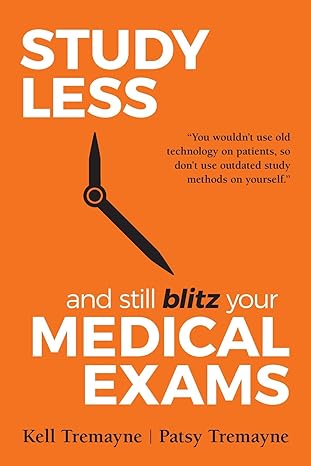
This approach builds on the practical exam preparation principles in Study Less and Still Blitz Your Medical Exams, co-authored by Dr Kell Tremayne and Dr Patsy Tremayne, and adapts them to individual exam performance planning.

Know the diagnosis but still losing marks?

A 1:1 Exam Performance Planning Session can help identify where marks are being lost after diagnostic recognition, and build a more targeted practice plan.