
I do not know why I failed
Start by identifying what may not have transferred into exam performance.
Use the diagnosis mapCommon exam preparation problem
A failed attempt does not automatically mean you need to study harder. The first task is to identify what limited performance — knowledge, recall, timing, structure, pressure, or the preparation system itself.
A result tells you that the previous preparation did not yet produce the required outcome. It does not automatically tell you what to change.
This page helps you turn a failed result into a clearer repeat-attempt plan: what to diagnose, what to keep, what to stop, and what to repair first.
Choose your pathway
You do not need to read this page in order. Start with the problem that best matches your situation.
Start by identifying what may not have transferred into exam performance.
Use the diagnosis mapMatch the likely failure pattern to a more useful repair.
Find the repair patternSeparate what to keep, what to change, and what to stop.
Use Keep / Change / StopUse a simple seven-day reset instead of rebuilding the whole plan.
Start the 7-day resetCheck whether the new resource will solve the actual bottleneck.
Check before addingA session can help clarify what likely limited performance.
How a 1:1 session helpsQuick diagnosis
Choose the statement that best matches your current problem. Each one points to a different repeat-attempt repair.
The result is clear, but the cause is not.
Diagnose firstThe next step depends on the type of failure pattern.
Match pattern to repairA strong reaction can lead to overcorrection.
Use Keep / Change / StopA short scorecard can show whether you need diagnosis or targeted repair.
Score the planMCQ, SAQ, viva, and OSCE failures can require different repairs.
Review by formatThe bottleneck may be hard to identify alone.
How a session helpsDoes this sound familiar?
The result is clear, but the cause is not. You may know the outcome without knowing whether the issue was knowledge, timing, exam technique, pressure, or preparation structure.
You may have covered the material, done questions, attended teaching, or followed a plan — but the preparation did not translate into the required exam performance.
When effort was already high, the next attempt needs more than another version of the same plan.
Without a clearer diagnosis, it is easy to study more while still leaving the same performance gaps unaddressed.
Repeat-attempt principle
A failed attempt shows that the previous preparation did not yet produce the required result. But it does not automatically tell you why.
The next step is not to assume that everything was wrong. It is to identify which parts of your preparation were useful, which parts were missing, and which parts did not transfer well into exam conditions.
A repeat attempt is usually more effective when the changes are linked to the most likely bottleneck rather than to the emotional force of the result.
Repeat attempt diagnosis map
A repeat attempt is usually stronger when changes are linked to the likely bottleneck. The same result can come from very different causes, so the next plan needs to be targeted rather than reactive.
Failed attempt
The previous preparation did not pass the performance test The outcome matters, but it is only the starting point. The result alone does not show what needs to change.Transfer question
What failed to transfer?Next attempt
Targeted repeat-attempt repair Keep what was useful, stop what was low-yield, and repair the most likely bottleneck.Diagnostic repair tool
The most useful change depends on the failure pattern. A knowledge problem, timing problem, structure problem and pressure problem should not all lead to the same study plan.
May not be solved by more practice questions alone. Better next action: targeted content repair, then test the repaired area with exam-style questions.
May not be solved by more reading or highlighting. Better next action: retrieval practice, answer production, and short written or spoken explanations.
May not be solved by more content coverage. Better next action: timed practice, decision rules, mark allocation, and stop points.
May not be solved by more notes. Better next action: pressure rehearsal, recovery routines, and simple restart structures.
May not be solved by more volume without review. Better next action: classify errors and repair one repeated pattern at a time.
May not be solved by a more ambitious timetable. Better next action: a realistic repeat-attempt plan with minimum viable weeks and reset rules.
Self-check tool
Use this scorecard to check whether you are ready to rebuild your plan, or whether you first need a clearer diagnosis. Score each item from 0 to 2.
| Item to score | Score |
|---|---|
| I know what type of mistakes I made, not just how many. | 0–2 |
| I know whether the issue was knowledge, timing, retrieval, structure, pressure, or review. | 0–2 |
| I know which resources, routines, or practice methods were actually useful. | 0–2 |
| I know what I should stop doing before the next attempt. | 0–2 |
| I have a realistic plan for the first week of preparation. | 0–2 |
| I have a way to test whether the new plan is working. | 0–2 |
The priority is to understand the likely bottleneck before adding more resources, hours, or pressure.
You may know enough to choose one or two high-impact changes rather than rebuilding everything.
You may be ready to convert the diagnosis into a practical weekly plan and feedback system.
Repeat attempt planning model
A failed attempt does not mean every part of your preparation was wrong. The task is to avoid both extremes: repeating the same plan without change, or discarding everything without a clear reason.
Keep a primary resource that helped understanding, a question bank that gave useful feedback, a study group that improved accountability, or a weekly routine that was sustainable.
Change how mistakes are reviewed, how practice is timed, how written or spoken answers are structured, or how weak areas are prioritised.
Stop rewriting notes as the main study method, switching resources repeatedly, avoiding timed practice, or rebuilding the plan every time you feel behind.
Resource-control check
After a failed attempt, adding a new resource can feel like a fresh start. Sometimes it helps. But if the resource is not linked to the actual bottleneck, it may add more load without improving readiness.
Name the bottleneck before adding the resource.
Decide whether the resource replaces an existing task or simply adds more work.
Identify whether it helps knowledge, retrieval, timing, structure, pressure, or review.
Choose a measurable sign that the resource is improving preparation.
Make space for the new resource by stopping lower-value work.
A new resource is only useful if it has a clear job in the repeat-attempt plan.
Why diagnosis is difficult
Exam results provide an outcome, but they do not always provide a diagnosis. Two candidates can fail for very different reasons.
One may have major knowledge gaps. Another may know enough in study but struggle with timing, structure, recall, prioritisation, or pressure in the exam itself.
Many candidates default to “I need to know more,” when the issue may also involve recall, application, timing, reasoning, or exam performance.
The same preparation approach is used again, but with more hours, more pressure, and more urgency.
Changing every resource, schedule, and strategy at once makes it harder to know what is actually helping.
Practice and revision may not clearly show what is driving errors or what needs to change before the next attempt.
Avoid these traps
After a failed attempt, many responses feel productive because they create action. The problem is that action is only useful if it is directed toward the actual bottleneck.
Studying longer helps only if the time is directed at the actual cause of the previous result.
A new resource can feel like a fresh start, but it may add load without improving performance.
Changing everything makes it harder to know what is helping.
Delaying exam-format practice can hide the exact problems that need repair.
Worked examples
A failed result becomes more useful when you translate it into a specific repeat-attempt repair. These examples show how the diagnosis changes the next action.
Situation: the problem may not be question volume. Less useful: do another 1,000 questions without changing the review method. Better: classify errors into knowledge, misreading, reasoning, timing and second-guessing, then repair the two most common patterns.
Situation: the issue may be answer production, not simply content knowledge. Less useful: keep rereading notes because the answers felt incomplete. Better: practise timed answers, command words, mark allocation and structure so knowledge converts into marks.
Situation: the main bottleneck may be retrieval, structure and recovery under pressure. Less useful: add more content notes without practising under realistic pressure. Better: practise short answer frameworks, restart phrases, recovery after prompts and simulated exam conditions.
Practical reset
The first week after a failed result should not be a rushed rebuild. It is a short diagnostic reset: gather information, identify patterns, and choose the first repair.
Days 1–2: do not rebuild the whole plan immediately. Collect marks, feedback, examiner comments, practice data, and your own notes about what happened.
Days 3–4: ask whether the main issue was content, recall, timing, structure, pressure, review quality, or preparation design.
Days 5–7: pick one or two changes only. Decide what to keep, what to stop, and what to test in the first week of the repeat-attempt plan.
Before rebuilding the plan
After a failed attempt, the aim is to move from reaction to diagnosis. Before changing everything, it helps to identify what most likely limited performance and which changes are most likely to matter.
Clarify what type of mistakes occurred, not just how many.
Separate knowledge gaps from timing, retrieval, structure, and pressure problems.
Review whether your practice matched the demands of the real exam.
Identify repeated patterns in questions, mocks, oral practice, or written responses.
Decide what to keep, what to stop, and what to change.
Build a next-attempt plan that tests performance, not just familiarity.
Better question
After a failed attempt, the question is often about what to change. But the more important step is to understand why the previous preparation did not transfer into the required performance.
This can lead to broad changes before the actual problem has been identified.
This shifts the next attempt toward targeted change rather than reactive rebuilding.
Exam-format repair
The repeat-attempt repair should match the format. An MCQ failure, SAQ failure, viva failure and OSCE failure may point to different breakdown points.
Repair targets include knowledge gaps, misreading, distractor traps, second-guessing, and rushing.
MCQ preparationRepair targets include answer structure, command words, mark allocation, timed output, and incomplete answers.
SAQ preparationRepair targets include retrieval under pressure, answer structure, conciseness, reasoning aloud, and recovery after prompts.
Viva preparationRepair targets include station opening, cue recognition, clinical sequence, communication, and recovery between stations.
OSCE preparationPersonalised planning support
The 1:1 Exam Performance Planning Session is designed to help you step back from the result, make sense of what may have happened, and identify targeted changes for the next stage of preparation.
Look at the result pattern, feedback, subjective experience, pressure points, and what you noticed during the exam.
Review resources, practice volume, review method, weekly structure, fatigue, and how closely practice matched the exam.
Separate knowing from retrieving, practising from performing, and studying from producing answers under exam conditions.
Clarify what to keep, what to stop, what to repair first, and what a realistic next week should look like.
Scope note
This work does not teach medical content, replace specialty teaching, provide medical advice, or promise exam results.
The focus is on how you prepare, practise, review mistakes, manage pressure, and convert hard work into more reliable exam-ready performance.
Common questions
Not automatically. First identify what was useful, what was missing, and what did not transfer into exam performance.
Sometimes knowledge is the issue, but not always. Timing, retrieval, structure, pressure, reasoning, and review systems can also limit performance.
Only if the new resource has a clear role. Adding resources without a diagnosis can increase overload.
Step back and diagnose the likely bottleneck before rebuilding the plan. The next attempt should be targeted, not just more intense.
Not immediately in a reactive way. First gather information, identify patterns, and decide what should stay, stop, or change.
Then the issue may be how questions were reviewed, whether errors were classified, or whether practice was being converted into changed performance.
Resource note
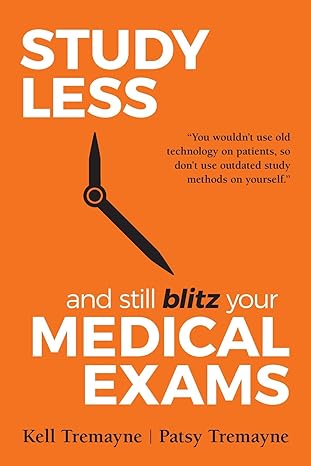
This approach builds on the practical exam preparation principles in Study Less and Still Blitz Your Medical Exams, co-authored by Dr Kell Tremayne and Dr Patsy Tremayne, and adapts them to individual exam performance planning.
If you failed a medical exam and are unsure what to change, a 1:1 Exam Performance Planning Session can help you step back, identify likely bottlenecks, and build a clearer plan for the next attempt.


Jul 11, 26 10:42 PM
Jul 11, 26 10:11 PM
Jul 11, 26 09:51 PM