
Everything feels important
The plan becomes crowded because there is no clear priority system.
Clarify prioritiesCommon exam preparation problem
A useful medical exam study plan is not just a timetable. It is a preparation system that helps you prioritise, practise, review mistakes, prepare under pressure, and keep moving when real clinical life interrupts.
The goal is not to create a perfect plan. The goal is to create a focused, flexible plan that helps you decide what matters most and what to do next.
This page helps you move from an overloaded timetable to a practical preparation system.
Quick pattern check
A study plan can fail for different reasons. Start by identifying what your current plan is not doing well enough.
The plan becomes crowded because there is no clear priority system.
Clarify prioritiesThe plan may allocate time without deciding what work is most useful.
Understand the reframeMistakes, scores, or feedback may not be changing what you do next.
Use feedback betterThe plan may need fallback versions rather than one rigid timetable.
Build flexible versionsChoose your pathway
You do not need to read this page in order. Start with the part of planning that feels least clear right now.
Start with the difference between a timetable and a preparation system.
Understand the reframeUse the planning inputs to decide what matters most.
Clarify prioritiesLook at how feedback from questions, mocks, and mistakes should change the plan.
Use feedback betterBuild full, minimum, recovery, and reset versions of the plan.
Build flexible versionsUse the quality check to see whether your plan is specific enough.
Check the planA 1:1 session can help turn your exam goal into clearer next actions.
How a session helpsRecognition check
This page may be relevant if one or more of these patterns describes your current exam preparation.
Everything feels important, so the plan becomes crowded, reactive, or difficult to follow.
The timetable may assume more time, energy, consistency, or predictability than your real week provides.
You may be completing tasks without knowing whether they are improving recall, reasoning, timing, communication, or exam performance.
You may know you need structure, but feel unsure how to turn the exam timeline into a realistic week-by-week plan.
Core reframe
Many candidates start with an ideal plan, then try to shrink it when life gets in the way.
A realistic plan starts differently. It begins with the exam demands, the time available, the candidate’s current baseline, the quality of available study time, and the type of practice most likely to improve performance.
Priority system
If everything feels equally important, the plan quickly becomes overloaded. A realistic medical exam study plan needs a way to separate high-value preparation from lower-value activity.
MCQ, SAQ, viva, OSCE, clinical, or written formats require different kinds of study and rehearsal.
The plan should respond to where you are now, not where you hoped to be by this stage.
The closer the exam, the more the plan needs to favour exam-relevant practice and feedback.
Repeated error patterns should influence what gets repaired, rehearsed, or reviewed next.
High-demand tasks need better-quality attention than light review, admin, or planning.
The plan should protect the skills most likely to affect exam performance under pressure.
Timetable vs preparation system
A timetable can help you allocate time. A preparation system helps you decide what to do with that time, how to practise, how to use feedback, and how to adjust when real life interrupts.
Timetable questions include: what topic will I cover, how many hours can I fit in, did I complete the task, and what is on the calendar?
Preparation-system questions include: what performance does the exam require, how will I practise, what are mistakes telling me to change, and how will I adapt?
Planning inputs
A useful plan is not built from the exam date alone. It should connect the exam format, current baseline, available time and energy, and feedback from practice to clear planning decisions.
Exam format, current baseline, available time and energy, practice results, feedback, and previous attempts.
What to prioritise, what to practise, what to review, what to stop, and what to adjust next.
A plan that connects study time to recall, reasoning, timing, communication, feedback, and performance under exam conditions.
Why plans break down
Many study plans fail because they are built around intention rather than reality.
If the plan only lists topics to cover, it may miss the most important question: whether the candidate is becoming more exam-ready.
Covering content can feel productive, but coverage is not the same as being able to retrieve, apply, explain, or perform under exam conditions.
A plan may allocate study hours without considering whether those hours are suitable for demanding tasks such as questions, recall, mocks, or oral rehearsal.
If practice results and mistakes do not change the next stage of study, the plan may keep moving without improving.
A missed study block, night shift, illness, or unexpected work demand can lead to abandoning the plan rather than adjusting it.
Feedback system
A study plan should not stay fixed if practice is showing something important. Feedback from questions, mocks, cases, written answers, or oral rehearsal should change the next stage of preparation.
Use questions, mocks, cases, written practice, oral rehearsal, or clinical scenarios.
Look for patterns in mistakes, timing, reasoning, recall, communication, or confidence.
Change the next study block, practice task, review focus, or rehearsal condition.
Check whether the changed approach improves performance in a similar or more exam-like task.
Study plan failure loop
When a plan is built around ideal conditions, the same loop can repeat: the plan becomes ambitious, real life interrupts, missed tasks accumulate, and the next plan becomes even harder to follow.
The plan assumes more time, energy, and predictability than the week provides.
Too many topics, resources, or tasks compete for limited attention.
Work, fatigue, family, illness, or unexpected demands disrupt the plan.
Missed work piles up and the plan becomes harder to re-enter.
Falling behind starts to feel like a personal failure rather than a planning-system problem.
The next plan becomes even more ambitious to catch up, and the loop repeats.
Planning traps
When a study plan is not working, the natural response is often to make it more detailed, more ambitious, or more intense.
Sometimes more structure helps. But if the structure is not connected to exam performance, it can create more pressure without creating better preparation.
A highly detailed timetable may look organised but can become fragile when clinical work, fatigue, family life, or unexpected demands interrupt the week.
More resources can increase the feeling of being prepared, but can also fragment attention and make priorities less clear.
Treating every topic, task, and format as equally important can make the plan impossible to execute.
Practice scores matter, but they should also guide what needs to change next.
Practical planning checklist
A realistic medical exam study plan should help you decide what matters most, how to practise, and how to adapt when the week changes.
The plan should also make feedback useful, so practice and mistakes change what you do next.
Clarify the exam timeline and the time actually available.
Identify the highest-value tasks for your exam format.
Separate content review from active recall, question practice, mocks, oral rehearsal, or clinical exam practice.
Build a mistake-review process that changes the next stage of preparation.
Match demanding tasks to higher-energy study blocks where possible.
Create fallback options for disrupted or low-energy weeks, then review and adjust without starting from scratch.
Planning reframe
When building a medical exam study plan, the question is not only about how many hours can be fitted into the week.
Hours matter, but this question can keep the focus on time allocation rather than preparation quality.
This shifts planning from hours and coverage toward targeted, exam-relevant preparation.
Six-part framework
A realistic plan should help you make decisions, not just fill a calendar.
What matters most for the exam format, your current baseline, and the time remaining.
How you will use questions, cases, mocks, written practice, oral rehearsal, or clinical exam practice.
How mistakes, scores, feedback, and practice results will change what you do next.
How you will practise timing, uncertainty, communication, recall, structure, and performance under exam-like conditions.
How the plan will adapt when the week changes, energy drops, or study blocks are missed.
How often you will step back, review what is working, and adjust the plan without rebuilding everything.
Plan quality check
A useful plan should answer more than when you will study. It should show what matters most, what kind of practice is needed, and how the plan will change when feedback or real life demands it.
What are the highest-value priorities this week?
What exam performance am I trying to improve?
What active practice is included?
How will I review mistakes?
What will change if feedback shows a repeated problem?
Which tasks need high-quality attention?
What is the fallback plan if the week is disrupted?
When will I review and adjust the plan?
Adaptive planning
A study plan should not stay fixed if practice is showing something important.
The plan should shift toward analysing option choices, comparing alternatives, and practising reasoning steps.
The plan should include timed practice, pacing checkpoints, and review of where time is being lost.
The plan should include shorter answer structures, signposting, and pressure rehearsal.
The plan should move high-demand work to better-energy blocks and use lower-energy periods differently.
Plan versions
A realistic plan is not one rigid timetable. It should have different versions depending on the week in front of you.
What you do when time and energy are reasonably available.
The smallest useful amount of work that keeps preparation moving during a difficult week.
What you do when fatigue is high and the best next step is to protect future learning and practice quality.
How you restart after a disrupted week without rebuilding the whole timetable from scratch.
Weekly reset tool
Even a good plan needs regular adjustment. A weekly reset helps you keep direction without rebuilding the whole plan from scratch.
What actually happened this week? What was completed, and what was missed?
What still matters most based on the exam, the timeline, and your current baseline?
What did questions, mocks, written answers, oral rehearsal, or cases show?
What needs to change next week because of feedback, fatigue, time, or priorities?
What is the minimum effective plan if next week is disrupted?
What is the next useful action rather than a full rebuild of the plan?
Worked examples
These examples show how a planning problem can be converted into a more useful next action.
Situation: the plan includes every topic, every resource, and every question bank. Less useful: add more hours and try to fit everything in. Better: identify the highest-value tasks for the next two weeks.
Situation: scores are recorded but not used diagnostically. Less useful: keep doing more questions in the same way. Better: classify mistakes and adjust the next study block.
Situation: a shift pattern, illness, family demand, or fatigue disrupts the timetable. Less useful: abandon the plan and restart next Monday. Better: use a reset plan and protect one or two priority actions.
Personalised planning support
The 1:1 Exam Performance Planning Session can help you turn a broad exam goal into a more specific preparation plan that fits your exam format, current baseline, available time, and real constraints.
The aim is not simply to add more study tasks. It is to clarify what matters most, what kind of practice is needed, how feedback should change the plan, and what to do next.
Look at the exam format you are preparing for and what kind of performance the exam requires.
Review your study structure, practice methods, mistake review, timeline, energy constraints, and pressure points.
Focus on what is most likely to improve exam performance, not simply what adds more work.
Leave with clearer actions for what to prioritise, practise, review, stop, and adjust next.
Scope
This work does not teach medical content, replace specialty teaching, provide medical advice, or promise exam results.
Building a realistic medical exam study plan, prioritising high-value tasks, using feedback to change the plan, creating flexible plan versions, and turning broad goals into specific next actions.
Replacing medical content teaching, providing medical advice, promising exam results, suggesting more study hours always means better preparation, or creating a rigid timetable.
The focus is on how you structure preparation, practise effectively, review mistakes, manage pressure, and build a realistic system for converting hard work into exam-ready performance.
Common questions
No. A realistic plan is not just a reduced version of an ideal plan. It should help you prioritise, practise, use feedback, and adjust when the week changes.
Priorities should come from the exam format, current baseline, time remaining, repeated mistakes, available energy, and the performance risks most likely to affect the exam.
Not necessarily. A good plan should change when practice reveals repeated problems with recall, timing, reasoning, structure, or performance under pressure.
Use a reset plan. Identify what still matters most, reduce or move lower-priority tasks, and restart from the next useful action rather than rebuilding everything.
Resource note
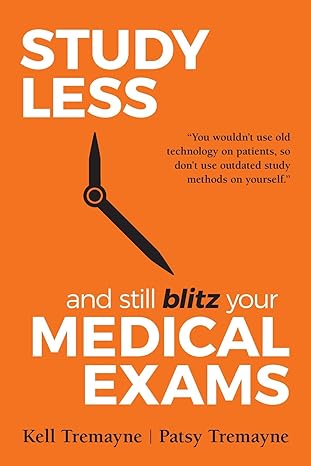
This approach builds on the practical exam preparation principles in Study Less and Still Blitz Your Medical Exams, co-authored by Dr Kell Tremayne and Dr Patsy Tremayne, and adapts them to individual exam performance planning.
If your current plan is unclear, unrealistic, or not improving exam performance, a 1:1 Exam Performance Planning Session can help you identify what to prioritise, what to stop, and what to change next.


Jul 11, 26 10:42 PM
Jul 11, 26 10:11 PM
Jul 11, 26 09:51 PM