
The plan assumes an ideal week
The timetable depends on predictable time, steady energy, and uninterrupted study blocks.
Likely issue: Roster reality is missing.
Use real-week planningCommon exam preparation problem
A medical exam study plan has to work around rosters, nights, fatigue, recovery, clinical work, family responsibilities, and weeks that do not go to plan.
The goal is not to create a perfect plan for an ideal week. The goal is to build a preparation system that survives the clinical life you actually have.
This page helps you design a study system around real energy, real shifts, real recovery needs, and real exam priorities.
Quick pattern check
When study around shifts feels difficult, the problem is often not just time. It may be the plan’s relationship with roster reality, energy, recovery, or fallback planning.
The timetable depends on predictable time, steady energy, and uninterrupted study blocks.
Likely issue: Roster reality is missing.
Use real-week planningQuestions, mocks, recall, or oral rehearsal are being done during low-quality attention.
Likely issue: Task-energy mismatch.
Match task to energyA missed block, late shift, or difficult week turns into a full restart.
Likely issue: No reset system.
Interrupt the cycleRecovery is treated as lost study time, even when fatigue is reducing study quality.
Likely issue: Recovery is not built into the plan.
Use a minimum planChoose your pathway
You do not need to read this page in order. Start with the issue that best matches your current study situation.
Start with the difference between ideal-week and real-week planning.
Use real-week planningLook at how to match high-demand tasks to higher-quality attention.
Match task to energyBuild fallback and reset plans so disruptions do not restart the whole process.
Build fallback optionsReframe recovery as part of protecting future attention, recall, and performance.
Use a minimum planUse anchor, flex, recover, and reset to stop difficult weeks becoming full derailments.
Use the frameworkA 1:1 session can help build a plan around your roster, energy, recovery, and exam demands.
How a session helpsRecognition check
This page may be relevant if one or more of these patterns describes your exam preparation around clinical work, shifts, fatigue, and disrupted weeks.
The plan may depend on ideal time, ideal energy, or a roster that does not actually exist.
You may be using your lowest-quality attention for the highest-demand tasks, such as questions, mocks, recall, or oral rehearsal.
Nights, long days, on-call work, or rotating shifts can interrupt the rhythm needed for consistent preparation.
Recovery can feel like lost study time, even when fatigue is reducing the quality of the study you are trying to do.
Core reframe
When doctors struggle to study around shifts and fatigue, the issue is often framed as a time-management problem.
Time matters. But time alone is not enough. The quality of attention, the timing of high-demand tasks, the need for recovery, and the unpredictability of the roster all affect whether study becomes useful preparation.
Planning principle
A useful exam preparation plan is not the one that looks most impressive on paper. It is the one that can survive real clinical weeks.
That means the plan has to account for nights, long days, fatigue, recovery, missed study blocks, family responsibilities, and the uneven energy that comes with clinical work.
Real-week planning map
A realistic plan starts with the roster and available energy, then matches study tasks to the kind of attention those tasks require.
Nights, long days, on-call, family responsibilities, recovery needs, and disrupted weeks.
Higher energy, moderate energy, low energy, depleted days, and recovery-only periods.
Questions, active recall, mocks, oral rehearsal, mistake review, light review, planning, or recovery.
A full plan, minimum plan, recovery plan, and reset plan for weeks that do not go perfectly.
Why standard plans break down
Many study plans are built around the number of hours available. For doctors working shifts, that is usually not enough. The quality, timing, reliability, and purpose of those hours matter just as much as the number of hours on the timetable.
The timetable may look realistic on paper, but it assumes steady energy, predictable evenings, uninterrupted weekends, and no recovery cost from clinical work.
Timed questions, active recall, oral rehearsal, mock exams, tricky reasoning, and detailed mistake review usually need better attention than tired time can provide.
When recovery is squeezed out, the plan may preserve study hours but lose study quality. Fatigue can affect attention, recall, decision-making, and error detection.
A missed session, late finish, night shift, or difficult week can lead to scrapping the whole plan instead of adjusting the next few actions.
Plan collapse cycle
When a plan is built around an ideal week, the same cycle can repeat: the plan is too ambitious, the roster disrupts it, guilt increases, and the next plan becomes even more overloaded.
The week is planned as if time and energy will be predictable.
Nights, long days, fatigue, family demands, or recovery needs interrupt the plan.
Study blocks are lost, delayed, or attempted when attention is poor.
The next plan becomes overloaded in an attempt to make up for missed work.
The cycle repeats unless the plan is redesigned for real clinical conditions.
A better response is usually not a more ambitious plan. It is a more resilient system.
Common planning traps
When preparation feels disrupted by shift work and fatigue, the natural response is often to push harder, add more hours, or make the plan more ambitious.
Sometimes more structure helps. But if the structure ignores the realities of clinical work, fatigue, recovery, and roster disruption, it can increase guilt and reduce follow-through.
Overly detailed plans can collapse quickly when the roster changes, a shift runs late, or recovery takes longer than expected.
Pushing through fatigue may produce time at the desk without producing useful learning, recall, decision-making, or exam-condition practice.
Large catch-up plans can create more pressure and make the next week feel impossible before it begins.
Recovery can feel like lost study time, even when fatigue is reducing attention, memory, practice quality, and performance.
Better planning target
A useful plan should match the reality of your roster, energy, recovery needs, and exam timeline.
The aim is to protect the highest-value preparation tasks and place them where they are most likely to be done well.
Build the plan around your actual roster, not an ideal study week.
Identify the highest-value tasks for your exam format and timeline.
Match harder tasks to higher-energy periods where possible.
Use lower-energy periods for lighter review, organisation, consolidation, or planning.
Protect recovery so practice quality does not collapse.
Create fallback tasks for disrupted or low-energy days, then review the plan weekly and adjust without starting again from scratch.
Task-energy matching
One hour after a night shift is not the same as one hour on a rested morning. A realistic plan does not treat all study hours as interchangeable.
| Energy level | Use this time for | Avoid if possible |
|---|---|---|
| Higher energy |
|
|
| Moderate energy |
|
|
| Low energy |
|
|
| Recovery only |
|
|
Planning reframe
A resilient plan changes the question from “What would I do in a perfect week?” to “What can I protect, adjust, or reduce in the week I actually have?”
Less useful: “I will study two hours every night.” More useful: “I will protect two better-quality blocks for questions and recall.”
Less useful: “I need to catch up everything I missed.” More useful: “I need to identify what still matters most and restart from there.”
Less useful: “Rest means I am falling behind.” More useful: “Recovery protects the quality of future study.”
Plan versions
When clinical work is unpredictable, it can help to have more than one version of the plan.
What you do when time and energy are reasonably available.
The smallest useful amount of work that keeps preparation moving during a difficult week.
What you do when fatigue is high and the best next step is to protect future learning and practice quality.
How you restart after a disrupted week without rebuilding the whole timetable from scratch.
Minimum effective plan
The exact minimum plan depends on the exam, timeline, and candidate. The point is to define a useful floor before the week becomes difficult.
A small, useful question block that maintains contact with exam-style decision-making.
A review block that turns practice into feedback rather than just volume.
A short retrieval-focused block rather than passive reading only.
A brief planning session to clarify the next priority and reduce unnecessary load.
Protected recovery after nights or heavy clinical days.
A minimum plan should protect the smallest useful actions that keep preparation moving.
Planning framework
A realistic study plan around clinical work often needs more than a single timetable. It needs a way to keep moving when the week changes.
Protect the few high-value tasks that matter most this week and place them in the best available blocks.
Use smaller alternatives when the roster, fatigue, or clinical load changes the original plan.
Treat recovery as part of the preparation system, not as a failure of discipline.
Use a weekly review to restart without rebuilding the entire plan from scratch.
Weekly reset tool
A weekly reset helps you adjust without rebuilding the entire plan from scratch.
What actually happened this week? Which study blocks were realistic?
Which tasks were too demanding for the energy available?
What still matters most next week?
What can be reduced, moved, or stopped?
What is the minimum effective plan if next week is disrupted?
What recovery needs to be protected so future study quality does not collapse?
Worked examples
These examples show how a disrupted week can be translated into a more useful planning response.
Situation: you planned a difficult question block immediately after nights. Less useful: force a full mock while depleted. Better: recover first, use light review, then protect a better block for questions.
Situation: a disrupted weekend means a major study session did not happen. Less useful: cram everything missed into the next week. Better: identify the highest-value missed task and restart from there.
Situation: you planned active recall and oral rehearsal after a long clinical day. Less useful: push through and judge the poor performance harshly. Better: use a low-energy task and protect a better block for active recall.
Personalised planning support
The 1:1 Exam Performance Planning Session can help you build a preparation plan that is realistic for your roster, fatigue, recovery needs, and exam demands.
The aim is not simply to add more hours. It is to clarify what kind of study matters most, when that study is most likely to be useful, and how to keep preparation moving when clinical life disrupts the original plan.
Look at how preparation currently fits around shifts, clinical work, fatigue, recovery, family responsibilities, and other demands.
Focus on the preparation tasks most likely to improve exam performance, rather than trying to do everything equally.
Consider which tasks require higher attention and which tasks can be used on lower-energy or disrupted days.
Leave with clearer priorities, realistic study tiers, and practical options for disrupted or low-energy weeks.
Scope
This work does not teach medical content, replace specialty teaching, provide medical advice, or promise exam results.
Planning around real clinical weeks, matching study tasks to available energy, protecting recovery and future study quality, and building fallback, minimum, and reset plans.
Replacing medical content teaching, providing medical advice about fatigue or sleep, suggesting that more hours always means better preparation, or promising exam results.
The focus is on how you structure preparation, protect practice quality, review mistakes, manage pressure, and build a realistic system around the demands of clinical work and exam preparation.
Common questions
Not usually. Time matters, but study quality also depends on energy, attention, recovery, task choice, and how the plan responds when the roster changes.
Not necessarily. Some post-shift periods may be better suited to lighter review, planning, or recovery rather than high-demand tasks such as timed questions or mocks.
Use a reset process. Review what actually happened, identify what still matters most, reduce or move non-essential tasks, and restart without rebuilding the whole plan.
Recovery can be part of preparation when fatigue is affecting attention, recall, decision-making, and practice quality.
Resource note
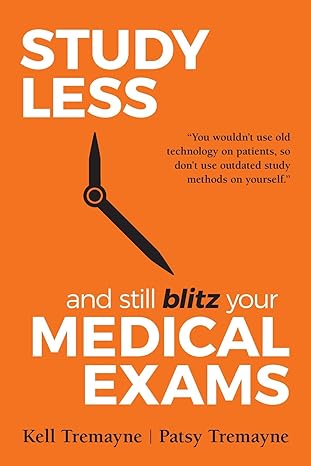
This approach builds on the practical exam preparation principles in Study Less and Still Blitz Your Medical Exams, co-authored by Dr Kell Tremayne and Dr Patsy Tremayne, and adapts them to individual exam performance planning.
If shifts, fatigue, and roster disruption are making exam preparation difficult, a 1:1 Exam Performance Planning Session can help you build a realistic plan around the time, energy, recovery needs, and exam demands you actually have.


Jul 11, 26 10:42 PM
Jul 11, 26 10:11 PM
Jul 11, 26 09:51 PM