
I make a plan but do not follow it
The plan may look sensible on paper but may not match your actual time, energy or competing demands.
Likely problem: unrealistic weekly design. Useful repair: build the plan from real available study windows.
Common exam preparation problem
Some candidates know they need a regular study routine, but their weekly plan keeps collapsing because work, shifts, fatigue, family demands, uncertainty, or overambitious planning repeatedly interrupt the schedule.
This can be frustrating because the problem may not be lack of commitment. You may care deeply about the exam and still struggle to build a routine that survives a real week.
When a plan repeatedly fails, the useful question is not only, “How do I become more disciplined?” It is, “Why does this routine keep breaking, and what structure would make it easier to continue?”
This page helps you identify whether the issue is unrealistic planning, low-energy study design, poor fallback options, weak task prioritisation, inconsistent review, or a plan that does not reflect your actual life.
Quick diagnosis
If your weekly study plan repeatedly falls apart, the problem may occur at different points in the routine.
The plan may look sensible on paper but may not match your actual time, energy or competing demands.
Likely problem: unrealistic weekly design. Useful repair: build the plan from real available study windows.
The plan may not include a recovery or fallback structure.
Likely problem: all-or-nothing routine. Useful repair: create minimum viable study sessions and restart rules.
The routine may depend on motivation, urgency or panic rather than repeatable habits.
Likely problem: burst-pattern study. Useful repair: build smaller regular sessions with protected recovery.
The study task may not match the energy available after work, shifts or life demands.
Likely problem: energy-task mismatch. Useful repair: match task difficulty to likely energy level.
The plan may be overloaded, with no buffer for missed sessions or review.
Likely problem: overpacked schedule. Useful repair: reduce planned volume and include buffer time.
The routine may lack clear priorities.
Likely problem: weak task prioritisation. Useful repair: define essential, useful and optional study tasks.
Start here
Choose the statement that best matches what happens when you try to follow a study routine.
The plan may be built around an ideal week rather than your actual week.
Likely problem: unrealistic planning. Better next action: map real study windows before assigning tasks.
Review breakdown mapThe routine may not have a restart rule.
Likely problem: all-or-nothing planning. Better next action: create a minimum fallback session.
Use the repair ladderUrgency may be driving the routine more than structure.
Likely problem: motivation-dependent study. Better next action: create small repeatable default sessions.
Choose routine targetsThe task may be too demanding for the time of day or energy state.
Likely problem: energy-task mismatch. Better next action: match active recall, review, questions or admin to energy level.
Match methods to energyThe plan may be compounding the problem rather than repairing it.
Likely problem: catch-up overload. Better next action: reset to priorities, not total backlog.
See worked examplesThe issue may need a more personalised planning process.
Likely problem: unclear routine design. Better next action: map constraints, priorities, fallback plans and review habits.
How a session helpsCandidates often describe inconsistent study routines as a repeated cycle of planning, falling behind, guilt and restarting.
The routine may collapse whenever work, fatigue, family, illness or life demands increase.
Instead of a stable routine, study becomes a cycle of falling behind and trying to recover with large sessions.
You study when you feel ready or anxious enough, but there is no reliable default when motivation is low.
The routine may require frequent rebuilding because the plan is too fragile or too complex.
Many candidates can design a study plan that looks reasonable on paper. The harder task is building a routine that survives the candidate’s real week.
A study routine has to compete with work, sleep, fatigue, family responsibilities, commuting, clinical demands, admin, uncertainty and recovery needs.
That means preparation needs a plan that includes realistic study windows, task priorities, fallback options and review points.
Routine-to-reality gap
If a study plan is built around the week you wish you had, it may collapse when it meets the week you actually have.
The plan assumes predictable time, energy, motivation and recovery.
The week includes work, fatigue, interruptions, decision fatigue, tired evenings, family demands and unexpected changes.
The useful routine includes priorities, smaller sessions, fallback tasks, review points and recovery from missed days.
Inconsistent study is often caused by routine design problems, not simply by lack of effort. The routine usually breaks because the design does not match the conditions it has to survive.
Routine diagnosis
A useful repair depends on which part of the routine is failing.
The plan is made, but it does not match the real week.
Repair: Build the plan from actual available study windows, not ideal intentions.
You avoid the session because the task feels too large, unclear or unpleasant.
Repair: Create a short start ritual and a minimum viable first task.
You can study for a few days but cannot maintain the routine.
Repair: Reduce session size and protect recovery.
One missed session causes guilt, delay or a full reset.
Repair: Use a restart rule: the next available small session restarts the routine.
You do not know what to do when time is short.
Repair: Separate essential, useful and optional tasks.
You repeat the same failed routine without changing the design.
Repair: Review the routine weekly and adjust time, task and fallback rules.
When a study routine keeps collapsing, candidates often respond by making a stricter or bigger plan. Sometimes that makes the pattern worse.
A bigger plan can create more failure points if the original plan was already unrealistic.
Motivation varies. A routine needs to survive days when motivation is low.
Catch-up plans often become too large and increase avoidance, fatigue or another missed week.
Better routine target
The repair should make the routine easier to repeat, recover and review.
Create a small version of study that keeps the routine alive on difficult days.
Separate essential tasks from useful and optional tasks.
Define how to continue after a missed session without rebuilding the whole week.
Practice ladder
Try this this week
Use this after a week where the study routine did not happen as planned.
Was the issue time, energy, starting, prioritisation, recovery, planning, or review?
What small rule would make the routine easier to repeat next week?
What is the smallest useful study session you will do next?
“How do I force myself to study more?” This can keep the focus only on discipline.
“What routine would make it easier to study consistently in the week I actually have?” This shifts the focus toward routine design.
Worked examples
Situation: you plan 15 hours of study, but realistically only complete 5. Less useful: make a stricter 20-hour plan next week. Better: plan the 5 most important hours first, then add optional blocks only if the week allows.
Situation: you miss Monday’s study session and then avoid study for the rest of the week. Less useful: wait until the next Monday to restart. Better: use a restart rule where the next available 20-minute session restarts the routine.
Situation: you plan difficult practice questions after a long shift and repeatedly skip them. Less useful: assume the problem is laziness. Better: move demanding questions to a higher-energy window and use low-energy time for review, error-log maintenance or light recall.
Study method guidance
The study method should fit the routine problem. The aim is to make the next useful task obvious, even when time or energy is limited.
Use minimum viable study, restart rules, and short default tasks such as five recall prompts, one question, or ten minutes of review.
Place demanding questions or recall in higher-energy windows and use lower-energy periods for review, error-log maintenance or planning.
Choose essential tasks first, reduce optional reading, and use weekly review to decide what needs adjusting next.
Personalised planning support
The 1:1 Exam Performance Planning Session can help identify why your study routine keeps collapsing and what needs to change in the structure of the week.
The aim is not simply to make a bigger timetable. The aim is to build a practical study routine that fits your exam demands, available time, energy patterns, work schedule and recovery needs.
We identify when the routine breaks: planning, starting, sustaining, recovering, prioritising or reviewing.
We look at work, shifts, fatigue, family duties, commute, recovery and exam timeline.
We build practical rules for minimum study, fallback sessions, priority tasks and weekly review.
You leave with a clearer routine plan that is easier to test and adjust.
Scope
The work is performance-focused: identifying why the routine repeatedly collapses, then designing a study structure that is realistic, repeatable and reviewable.
Common questions
Often the plan is built around an ideal week rather than the week you actually have. The issue may be routine design, not lack of commitment.
Use a restart rule. The next available small session restarts the routine. Do not wait for a new week or a perfect block of time.
Not always. If the current plan is already unrealistic, a stricter timetable may create more failure points. A smaller, more repeatable routine may work better.
Match the study task to the energy available. High-effort tasks may need higher-energy windows. Lower-energy periods may suit review, recall, error-log work or planning.
Resource note
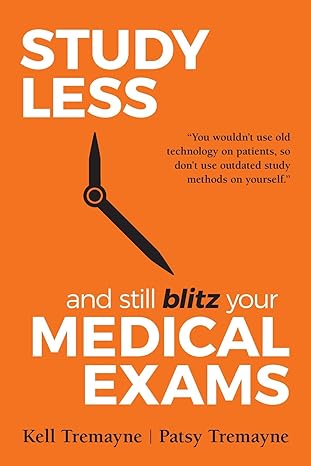
This approach builds on the practical exam preparation principles in Study Less and Still Blitz Your Medical Exams, co-authored by Dr Kell Tremayne and Dr Patsy Tremayne, and adapts them to individual exam performance planning.
A 1:1 Exam Performance Planning Session can help identify why your weekly study routine keeps collapsing and build a more realistic, repeatable plan.


Jul 11, 26 10:42 PM
Jul 11, 26 10:11 PM
Jul 11, 26 09:51 PM