
I avoid practice because mistakes feel threatening
Practice may feel like confirmation that another failure is coming.
Likely problem: avoidance after repeated setbacks. Useful repair: use smaller practice tasks with specific review targets.
Common exam preparation problem
For medical exam candidates whose confidence has dropped after one or more unsuccessful attempts, making it harder to restart study, trust practice, tolerate mistakes, or believe that improvement is possible.
Low confidence after repeated exam attempts can be difficult because it is not only about how much you know. Previous results can change how you approach practice, feedback, mistakes, mocks and exam-day pressure.
Some candidates respond by avoiding practice. Others overwork, overcheck, constantly change their plan, or search for certainty before they feel ready to try again.
This page helps you identify how repeated attempts may be affecting your preparation, and how to rebuild confidence through a clearer, more targeted and more evidence-based practice process.
Quick diagnosis
Low confidence after repeated attempts can affect different parts of preparation. The repair depends on what confidence is changing.
Practice may feel like confirmation that another failure is coming.
Likely problem: avoidance after repeated setbacks. Useful repair: use smaller practice tasks with specific review targets.
Repeated attempts may have made it hard to trust any one approach long enough to test it.
Likely problem: low trust in the preparation process. Useful repair: commit to a short, reviewable practice cycle.
You may keep studying, checking or rewriting because stopping feels risky.
Likely problem: overcontrol and reassurance seeking. Useful repair: define sufficient practice and stopping rules.
Mistakes may feel like proof that you are not improving.
Likely problem: mistake intolerance. Useful repair: review mistakes as diagnostic data, not verdicts.
The preparation process may not be producing visible evidence of progress.
Likely problem: unclear feedback loop. Useful repair: track specific performance markers, not only total scores.
The previous attempt history may be affecting motivation, energy, and willingness to engage.
Likely problem: exam-history burden. Useful repair: rebuild confidence through staged exposure to exam-like practice.
Start here
Choose the statement that best matches what repeated attempts have changed for you.
Previous attempts may have damaged trust in the process. Start by creating a short practice cycle that can be reviewed.
Review the breakdown mapPractice may have become emotionally loaded. Start with small, specific practice tasks with a narrow review focus.
Use the practice ladderVolume may be acting as reassurance rather than evidence. Define readiness markers and stopping rules.
Choose repair targetsMistakes may be interpreted as global evidence. Classify mistakes by cause and repair task.
Try the confidence drillComparison may increase pressure without clarifying what needs to change. Focus on your own evidence and next repair.
Use the better questionThe hard part may be translating previous results into a clearer next plan.
How a session helpsCandidates often describe low confidence after repeated attempts as a cycle of effort, doubt, avoidance and restarting.
You may be doing work, but the previous result makes it hard to believe the work is changing anything.
Questions, mocks, timed stations or error review may feel threatening because they show gaps.
You may keep adding more resources, notes, questions or courses because stopping feels unsafe.
A good practice session briefly helps, but one poor session resets doubt again.
Low confidence after repeated attempts is understandable, but it is not always the best starting point for repair.
The more useful starting point is the process that confidence is affecting: avoidance, overchecking, inconsistent study, poor mistake review, unstable practice, or difficulty committing to a plan.
Confidence usually improves when candidates can see credible evidence that preparation is becoming more targeted, repeatable and exam-relevant.
Low confidence may be the symptom. The underlying problem may be that the candidate does not yet know what changed after the previous attempt.
If preparation looks similar each time, confidence may stay low because the next attempt does not feel meaningfully different from the last one.
A better question is: “What evidence do I have that my preparation process is now different, more targeted, and more exam-ready?”
Repeated attempts can affect how candidates interpret practice, feedback and uncertainty. Practice can start to feel like a verdict rather than a source of information.
A wrong answer may feel like proof that nothing has changed. A mock exam may feel like a preview of another failure. A difficult topic may trigger avoidance, and a poor practice session may make the whole plan feel unsafe.
This is why confidence after repeated attempts needs to be rebuilt through better evidence. The aim is to make practice specific enough that mistakes identify repair targets rather than becoming global evidence that improvement is impossible.
Confidence diagnosis
A useful repair depends on where low confidence is interrupting the preparation process.
You delay restarting study because beginning again feels heavy or unsafe.
Repair: Set a small restart task that does not require full confidence.
You avoid questions, timed practice or mocks because the result might be discouraging.
Repair: Use short practice blocks with one diagnostic target.
Mistakes feel like personal evidence rather than performance data.
Repair: Classify mistakes by cause: content, retrieval, reasoning, timing, structure or pressure.
You keep changing resources, tutors, schedules or strategies.
Repair: Run a short planning cycle before changing the whole system.
You keep studying because stopping feels unsafe, even when practice quality is dropping.
Repair: Use sufficient-practice rules and recovery time.
Mocks, timed stations or exam registration trigger avoidance or overcontrol.
Repair: Use gradual exposure to exam-like practice.
When confidence is low, candidates often try to feel better before they practise. Sometimes confidence returns only after practice becomes safer, clearer and more diagnostic.
Waiting until confidence returns can keep the candidate stuck. Only studying more content may miss avoidance, pressure response or poor mistake review. Changing everything at once may feel reassuring briefly, but it can also prevent the candidate from knowing what actually helped.
Avoiding mocks and timed practice can reduce discomfort in the short term, but it also prevents confidence from being rebuilt under exam-like conditions. Reassurance can settle doubt briefly, but confidence needs evidence.
Better confidence target
The repair should make preparation more evidence-based, safer to re-enter, and easier to review.
Use a first task small enough to begin even when confidence is low.
Review mistakes by cause rather than treating every mistake as proof of failure.
Track specific markers such as fewer repeated errors, better timing, clearer structure or improved recall.
Practice ladder
Try this this week
Use this after a difficult practice session, mistake-heavy block, mock exam, or moment of avoidance.
What affected confidence: the score, a mistake, a topic, a mock, comparison, time pressure, or memory of the previous attempt?
What does this show specifically: content gap, retrieval issue, reasoning problem, timing issue, structure issue, or pressure response?
What is one small practice task that would test or improve this pattern?
“How do I feel more confident?” This keeps confidence as the target feeling.
“What evidence would show that my next attempt is being prepared differently?” This makes confidence the outcome of a changed process.
Worked examples
Situation: question blocks feel threatening because each wrong answer lowers confidence. Less useful: avoid questions until you feel ready. Better: use a short diagnostic block and review errors by cause rather than score.
Situation: each difficult session makes you doubt the whole strategy. Less useful: buy another resource or completely rebuild the plan. Better: run a two-week practice cycle and review whether the targeted repair is working.
Situation: you study for long hours but still feel unsafe stopping. Less useful: add more hours without criteria. Better: define readiness markers such as improved retrieval, fewer repeated mistake types, clearer timing and better exam-format output.
Study and practice guidance
Different confidence problems need different forms of practice. The aim is to choose the smallest useful action that creates evidence, not to force confidence first.
Use small diagnostic practice blocks and restart tasks that make practice easier to re-enter.
Use mistake classification and repair planning so mistakes become data rather than verdicts.
Use short review cycles, sufficiency markers, recovery rules and gradual exam exposure before rebuilding the whole plan.
Personalised planning support
A 1:1 Exam Performance Planning Session can help identify how repeated attempts have affected confidence, avoidance, practice quality, mistake review and exam readiness.
The aim is not simply to provide reassurance. The aim is to build a clearer preparation process that creates evidence of change before the next attempt.
We identify where confidence is affecting study, practice, review, timing, mock exams or exam-day performance.
We look at what the previous attempt history suggests, without treating the result as the whole story.
We identify whether to focus on avoidance, mistake review, study structure, exam simulation, pressure response or planning.
You leave with a clearer process for rebuilding preparation and tracking evidence of progress.
Scope
The work is performance-focused: identifying how repeated attempts have changed confidence and behaviour, then designing practice that rebuilds trust through evidence.
Common questions
Confidence is usually rebuilt through evidence. Start with small diagnostic practice tasks, review mistakes by cause, and track specific signs of progress.
Usually no. Confidence often follows structured practice, not the other way around. Start with small tasks that are useful but not overwhelming.
Use mistake classification. Identify whether the mistake came from content, retrieval, reasoning, timing, structure or pressure. Then choose a repair task.
Look for evidence that preparation is different: clearer review, fewer repeated error types, better timed performance, improved recall, stronger structure and a more realistic plan.
Resource note
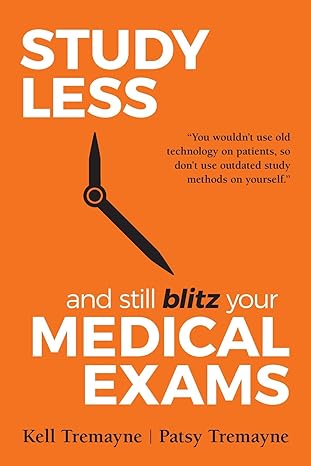
This approach builds on the practical exam preparation principles in Study Less and Still Blitz Your Medical Exams, co-authored by Dr Kell Tremayne and Dr Patsy Tremayne, and adapts them to individual exam performance planning.
A 1:1 Exam Performance Planning Session can help identify how previous attempts are affecting confidence, avoidance and practice, then build a clearer preparation plan for the next attempt.


Jul 11, 26 10:42 PM
Jul 11, 26 10:11 PM
Jul 11, 26 09:51 PM