Know the Content but Struggle to Perform in Oral, Viva, OSCE, or Clinical Exams?
These exams require more than knowing the content. They require you to retrieve, organise, communicate, decide, and recover while being observed, timed, questioned, or redirected.
The goal is not simply to study more content. The goal is to practise the performance the exam actually requires.
This page helps you identify whether the main issue is spoken structure, clinical reasoning, station execution, communication, timing, or recovery under pressure.
What Format Problem Are You Trying to Solve?
Oral, viva, OSCE, and clinical exams can look different, but candidates often struggle for one of these practical reasons.
I know it, but cannot say it clearly
The issue may be translating knowledge into spoken structure.
The format changes how I perform
The exam may add observation, timing, prompts, or station demands.
My answer loses structure
You may need flexible answer structures rather than memorised scripts.
My practice does not feel realistic
You may be studying content without rehearsing the actual performance.
Choose Your Starting Point
You do not need to read this page in order. Start with the section that best matches what is currently making the exam format difficult.
I need to understand the performance gap
Start with why knowing content is not the same as showing performance.
Understand the gapI need to prepare for a specific format
Compare oral, viva, OSCE, and clinical exam performance demands.
Compare formatsI need more realistic rehearsal
Build practice gradually from spoken answers to realistic mocks.
Use the ladderI need better answer structure
Learn why flexible structures work better than rigid scripts.
Structure answersI freeze, ramble, or lose focus
Focus on recovery, prioritising, and keeping performance organised.
Practise skillsI need help diagnosing my preparation
A 1:1 session can help identify what the exam format requires next.
How a session helpsDoes This Sound Familiar?
This page may be relevant if one or more of these patterns describes your preparation for an oral, viva, OSCE, or clinical exam.
You know the content but struggle to say it clearly
Your issue may be turning knowledge into a clear, structured answer while being observed, timed, questioned, or redirected.
You lose structure when questioned
Examiner prompts, interruptions, unfamiliar wording, or follow-up questions can make your thinking feel less organised.
Your answers become too long, vague, or unfocused
You may need a clearer way to decide what to say first, what to prioritise, what to leave out, and when to stop.
Your practice does not feel like the real exam
You may be revising content without enough rehearsal of the format, timing, pressure, prompts, stations, or uncertainty of the actual exam.
Why These Exams Feel Different
Oral, viva, OSCE, and clinical exams change the task. It is no longer only about what you know. It is about what you can show, say, prioritise, and do in a specific format.
A candidate can know the topic but still struggle if the answer is poorly structured, too long, too vague, too slow, or difficult for the examiner to follow.
These formats require candidates to translate knowledge into observable performance: spoken explanations, clinical reasoning, structured responses, prioritised decisions, communication, timing, and recovery under pressure.
From Knowledge to Observable Performance
In oral, viva, OSCE, and clinical exams, content knowledge has to be translated into a visible performance. The candidate needs to speak, structure, prioritise, decide, communicate, and recover in the format the exam creates.
Different Formats Create Different Performance Demands
Oral, viva, OSCE, and clinical exams can overlap, but they do not all test performance in exactly the same way. The more clearly you understand the format, the more deliberately you can rehearse the performance it requires.
Spoken reasoning
Explain reasoning, structure answers, respond to examiner questioning, and keep thinking clear when interrupted or redirected.
Station execution
Manage station flow, communicate clearly, perform required tasks, prioritise actions, and use time effectively.
Clinical judgement
Observe, interpret, prioritise, justify clinical decisions, and explain what matters most in the case.
Recovery and control
Continue after uncertainty, manage time, recover after mistakes, and stay structured under pressure.
Why These Exams Require Different Preparation
Written study can create familiarity with content, but oral, viva, OSCE, and clinical exams require active performance.
The exam may ask you to explain reasoning, respond to a scenario, manage a station, communicate with a patient or examiner, make a decision, or continue after uncertainty.
If most of your preparation happens silently, slowly, or without realistic prompts, your study may not fully train the performance you need to produce.
Content knowledge does not become spoken structure
You may know the material, but not have practised turning it into clear, concise, organised answers.
Practice lacks realistic prompts
Revision may involve reading notes or reviewing topics, but not enough exposure to cases, stations, examiner-style questions, or timed speaking practice.
Uncertainty disrupts performance
When a question is ambiguous or unexpected, candidates may freeze, over-explain, second-guess, or lose their answer structure.
Feedback is too general
Feedback such as “be more structured” or “sound more confident” may be true, but it does not always show what to practise next.
What Often Does Not Train Exam-Format Performance
When candidates feel uncertain about oral, viva, OSCE, or clinical exams, the natural response is often to revise more content.
Content matters. But if the difficulty is producing a clear, structured performance in real time, content review alone may not be enough.
Only reading more
Reading may improve familiarity, but it does not necessarily train speaking, structuring, deciding, or responding under pressure.
Waiting until you feel ready to practise
Many candidates delay oral or OSCE-style rehearsal because it feels uncomfortable, but the performance itself is what needs to be trained.
Trying to say everything
These exams often reward prioritised, organised responses more than exhaustive answers.
Only doing informal practice
Casual discussion can help, but candidates also need practice that resembles the timing, format, uncertainty, and pressure of the actual exam.
What to Rehearse Instead
Preparation should train the performance the exam requires, not just the content the exam may draw on.
The aim is to make your practice more active, structured, timed, and representative of the real exam format.
Performance Skill → Practice Method
The most useful practice task depends on the specific performance skill that is breaking down.
Answers are too long
Practise 60–90 second answers with a clear stop point.
Answers lose structure
Practise an opening framework, signposting, and a short summary phrase.
Freezing when questioned
Practise restart phrases, first-line structures, and brief recovery after prompts.
Poor OSCE flow
Practise station opening, time checkpoints, cue recognition, and closure.
Weak reasoning explanation
Practise comparing the top two options aloud and explaining why one is more likely or safer.
Carry-over after a bad station
Practise a between-station reset routine: release, refocus, and restart.
Build Exam-Format Rehearsal Gradually
Exam-like practice does not need to start with a full mock. It can be built gradually so that speaking, structuring, timing, questioning, and recovery become more familiar before the real exam.
Speak answers aloud alone
Start by turning silent knowledge into spoken responses without needing an audience.
Practise with prompts or cases
Use realistic cases, stations, stems, or examiner-style prompts to shape your practice.
Practise timed answers
Add time limits so you practise deciding what matters most and when to stop.
Practise with questioning
Ask another person to prompt, question, redirect, or interrupt so you practise maintaining structure.
Practise recovery
Rehearse what to do after a pause, missed cue, unclear question, or imperfect answer.
Practise full mock sequences
Move toward full stations, viva-style sequences, or clinical exam rehearsals when earlier steps are more stable.
Structures, Not Scripts
In oral, viva, OSCE, and clinical exams, structure helps both the candidate and the examiner. It helps you decide what to say first, how to show reasoning, how much detail to include, and when to stop.
The aim is not to memorise rigid scripts. Scripts can break down when the question changes. The aim is to build flexible structures that help you organise your thinking across different cases, prompts, and stations.
Rigid scripts
Can fail when the question changes, the examiner redirects, or the case does not match what you rehearsed.
Flexible structures
Give you a starting point, a way to prioritise, and a way to keep going when the prompt is unfamiliar.
A Simple Thinking Structure for Clearer Answers
- Start with the main issue, judgement, or task.
- Explain the reasoning that supports it.
- Prioritise the next step or most relevant action.
- Add key risks, caveats, or alternatives if relevant.
- Stop before the answer becomes unfocused.
The More Useful Question
When preparing for oral, viva, OSCE, or clinical exams, the question is not only about whether you know enough.
“Do I know enough?”
This may be relevant, but it can keep preparation focused only on content familiarity.
“Have I practised producing the required performance in the format the exam demands?”
This shifts preparation toward structure, communication, timing, decision-making, and recovery.
What Format-Specific Practice Looks Like
These examples show how a common performance problem can be translated into a more useful practice task.
Viva answer becomes too long
You keep adding detail because you are unsure what the examiner wants.
Revise more content and hope the answer becomes clearer.
Practise 90-second structured answers with a clear stopping point.
OSCE station falls apart after a missed cue
You realise mid-station that you missed something and then lose flow.
Only review the clinical topic afterwards.
Practise recovery phrases and time checkpoints within stations.
Clinical reasoning is hard to explain
You have a reasonable impression, but struggle to justify it clearly.
Memorise more differentials.
Practise comparing the top two options aloud.
How a 1:1 Exam Performance Planning Session Can Help
The 1:1 Exam Performance Planning Session helps you identify what the exam format requires and how to adjust your preparation so practice becomes more realistic, structured, and useful.
The aim is not simply to add more study hours. It is to clarify what kind of performance your oral, viva, OSCE, or clinical exam requires — and what you need to rehearse next.
Clarify the performance demands
We look at whether your exam requires oral explanation, clinical reasoning, station management, structured responses, communication, timing, or decision-making under pressure.
Review your current preparation
We examine whether your current practice is close enough to the format, timing, uncertainty, and pressure of the exam.
Identify what to practise next
The focus is on practical next steps: structure, communication, timing, recovery, mock practice, mistake review, or pressure rehearsal.
Build a clearer practice plan
You leave with more specific actions for preparing in a way that better matches the exam format.
This Page Is About Exam-Format Performance
This work does not teach medical content, replace specialty teaching, provide therapy, or promise exam results.
This page is about
- Turning knowledge into observable performance
- Structuring spoken answers
- Rehearsing oral, viva, OSCE, and clinical exam formats
- Practising timing, communication, decision-making, and recovery
This page is not about
- Replacing medical content teaching
- Memorising rigid scripts
- Providing therapy or mental health treatment
- Promising exam results
The focus
The focus is on how you prepare, practise, structure answers, communicate under pressure, review mistakes, and convert hard work into more reliable exam-ready performance.
Questions About Oral, Viva, OSCE, and Clinical Exam Preparation
Is this mainly about knowing more content?
Not usually. Content matters, but these exams also require structure, communication, timing, judgement, and recovery under exam conditions.
How do I stop rambling in viva or oral exams?
Practise short structured answers with a clear opening, reasoning sequence, priority point, and stopping point.
Why does OSCE practice feel different from study?
OSCEs require station flow, time management, communication, cue recognition, and task execution — not just content recall.
Should I memorise model answers?
Model answers can be useful for learning structure, but rigid scripts often break when the case, question, or examiner prompt changes.
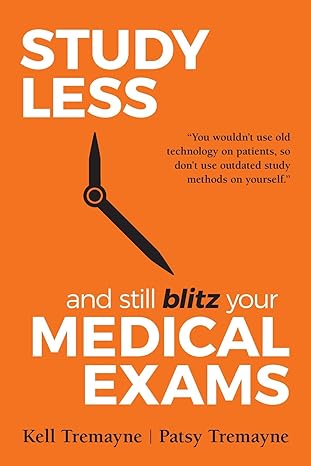
This approach builds on the practical exam preparation principles in Study Less and Still Blitz Your Medical Exams, co-authored by Dr Kell Tremayne and Dr Patsy Tremayne, and adapts them to individual exam performance planning.
Need to Turn Knowledge Into Clear Exam Performance?
If you know the content but need to perform more clearly in an oral, viva, OSCE, or clinical exam, a 1:1 Exam Performance Planning Session can help you identify what to practise next.
Recent Articles


-
Viva Answer Structure for Medical Exams
Jul 11, 26 10:42 PM
Structure medical viva answers by framing the response, stating the key point, making reasoning audible and stopping cleanly under examiner pressure. ` -
How to Prioritise Points in SAQ Answers
Jul 11, 26 10:11 PM
Prioritise medical SAQ points by identifying the task, ranking clinical value, writing likely marking points first and removing low-yield detail. -
How to Structure SAQ Answers Under Time Pressure
Jul 11, 26 09:51 PM
Structure medical SAQ answers under time pressure by identifying the task, planning markable points, prioritising content and protecting completion.